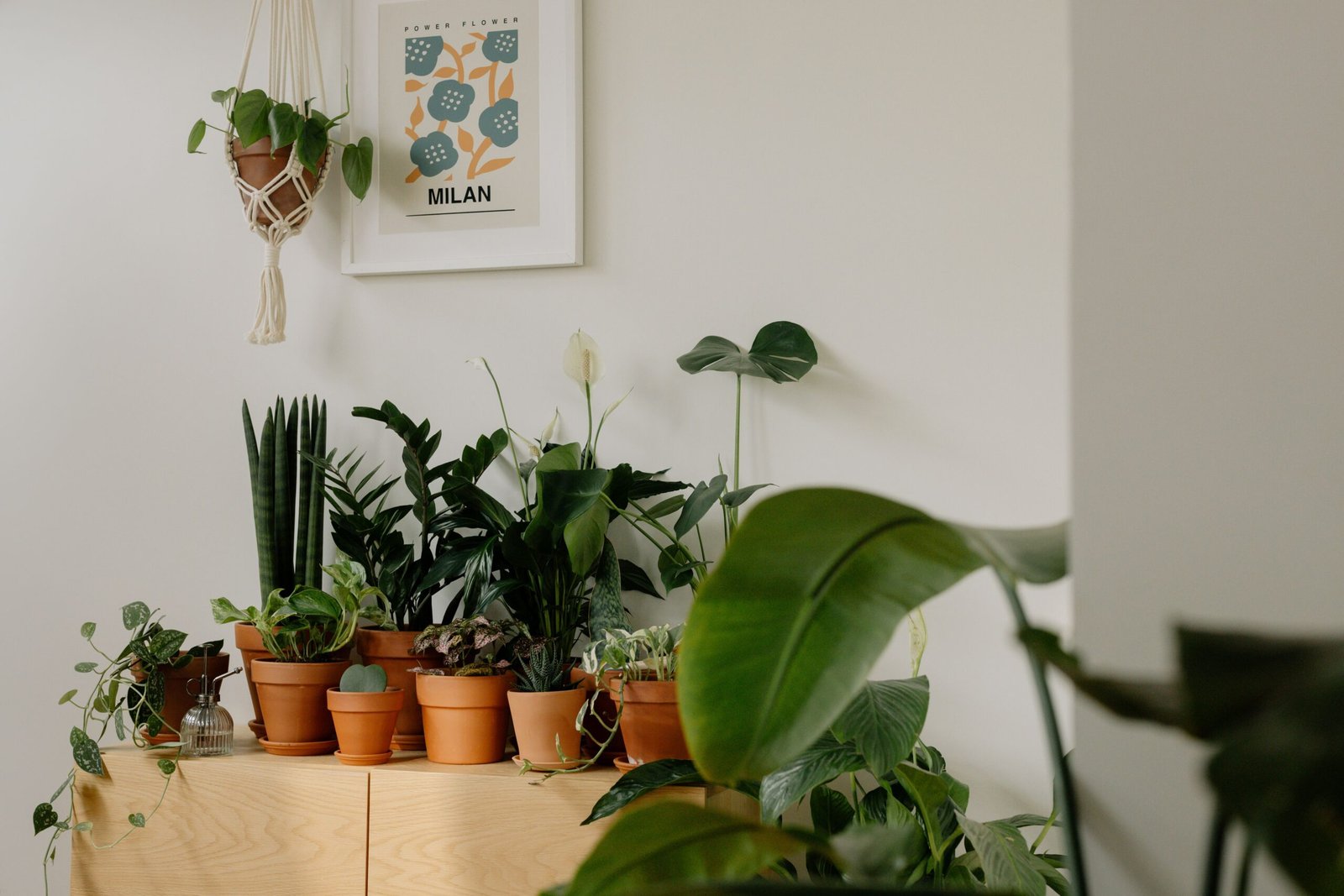
In a small apartment, a plant pot is not just a container. It affects how quickly the mix dries, how easy the plant is to move, whether water damages furniture, how much usable floor or shelf space disappears, and how stable the plant is around people or pets.
The right choice is usually simpler than it looks: prioritize drainage, appropriate size, manageable weight and placement before color or trend. Penn State Extension recommends drainage holes for houseplant containers, while the Royal Horticultural Society warns that moving a plant into a much larger pot can leave too much damp growing medium around the roots.
If you are still deciding which plants fit your space, start with our indoor plants for small apartments guide. If you already know the plant, this guide helps you choose the container around it.
The short version: what matters most
| Decision | What to prioritize | Apartment reason |
|---|---|---|
| Drainage | At least one effective drainage hole | Reduces the risk of waterlogged mix |
| Pot size | Only slightly larger than the root ball when repotting | Less excess wet mix; smaller footprint |
| Weight | Lightweight where movement matters; heavier where stability matters | Easier cleaning, rotation and safe placement |
| Material | Match drying rate and handling needs | Indoor conditions differ from plant to plant |
| Shape | Fit roots and placement, not just decor | Narrow shelves and corners punish oversized shapes |
| Water control | Saucer or inner nursery pot inside a cachepot | Protects floors, shelves and furniture |
1. Start with drainage, not decoration
For ordinary houseplants, drainage is the first filter. Penn State Extension states that a container with drainage holes is necessary so excess water can leave the potting mix rather than keeping it waterlogged.
That matters even more in an apartment because many plants receive lower indoor light than they would outdoors. Lower light generally means slower growth and slower water use, so a pot that traps water becomes less forgiving.
A decorative pot without holes can still work as a cachepot: keep the plant in a separate inner pot with drainage, remove it for watering, let it drain completely, then return it to the decorative outer container. Do not let the inner pot sit in collected water.
2. Do not jump to a much larger pot
“Bigger” does not automatically mean “better.” RHS guidance on overpotting recommends moving only to a slightly larger container rather than making a large jump. Its repotting guidance commonly suggests roughly 2.5–5 cm (1–2 in) more width for smaller containers.
The reason is practical: a large mass of unused potting mix can stay wet long after the roots have taken what they need. That can reduce oxygen around the root zone and increase the risk of root problems.
In a small apartment, correct sizing has a second benefit: it prevents a compact plant from occupying a needlessly large piece of furniture or floor area.
3. Choose weight according to where the pot will live
Penn State Extension notes a useful material trade-off: plastic and fiberglass are comparatively light and easy to move, while stone and concrete are heavier and more resistant to tipping.
That makes weight a design decision, not simply a quality judgment.
- Use lighter pots on shelves, plant stands, rolling carts and anywhere you move plants frequently for cleaning or seasonal light.
- Use more stable pots for tall or top-heavy plants at floor level, especially in narrow traffic paths.
- For hanging plants, calculate the wet weight of the entire system: pot + plant + saturated mix + retained drainage water.
4. Match the material to your watering habits
Pot material changes how the root zone behaves.
Plastic and resin
These are lightweight, durable and usually retain moisture longer than unglazed clay. They are useful when a plant prefers a more even moisture level or when the pot must be moved often.
Terracotta
Unglazed terracotta is porous. Penn State notes that it can pull water and soluble salts from the potting mix, so plants in terracotta generally need watering more often than plants in plastic. That faster drying can be useful for succulents and for people who tend to overwater.
Glazed ceramic
Glazed ceramic can provide more weight and visual finish while losing less moisture through the sides than unglazed terracotta. It is a good choice when stability matters, provided drainage is adequate.
Concrete and stone
These are stable and durable but heavy. In an apartment they make most sense when a plant is intended to stay in one location rather than being moved every week.
Metal or decorative containers
Many are better used as outer cachepots rather than direct growing containers. Check drainage, heat exposure and interior coatings before planting directly into them.
5. Think about footprint, not just diameter
Apartment space is three-dimensional. A pot that works on the floor may be terrible on a windowsill; a hanging planter may solve a floor-space problem but create a head-height problem.
Before buying, measure:
- the shelf or sill depth;
- the available width around leaves;
- the clearance above the plant;
- the distance from curtains, doors and walkways;
- the total height once the saucer or plant stand is included.
A narrow cylindrical pot may use a shelf better than a wide bowl, while a broad low pot may be safer for a top-heavy plant. Form should follow the root system and placement.
6. Use vertical space carefully
Hanging planters, wall-mounted systems and tall stands can free valuable floor area. They are particularly useful for trailing plants such as pothos or spider plant.
But vertical placement adds new constraints:
- the mounting point must support wet weight;
- watering should not drip onto furniture or electronics;
- you must still be able to remove or access the pot safely;
- plants should not block windows or ventilation;
- pet access may change as stems trail downward.
Vertical space is useful only if maintenance remains realistic.
7. Protect shelves and floors from drainage water
A drainage hole solves a root-zone problem but creates a household-management problem: water has to go somewhere.
Use a saucer that is wide enough to catch runoff, or water the plant in a sink or shower and return it after drainage stops. For decorative cachepots, empty accumulated water after watering.
On wood, stone or painted surfaces, consider a waterproof barrier beneath the saucer. Condensation and slow leaks can cause damage even when there is no dramatic overflow.
8. Small apartments often need movable plants
Indoor light changes through the year. Furniture gets moved. Windows need cleaning. Air-conditioning or heating may create seasonal hot and cold zones.
For medium and large plants, mobility can be part of the pot system:
- lightweight fiberglass or resin containers;
- plant caddies with locking wheels;
- separate decorative cachepots around lightweight nursery pots;
- handles or shapes that are easy to grip.
A beautiful pot that is impossible to move can become a maintenance problem in a compact home.
9. Match the pot to the room's light
Light and pot choice interact through water use. A plant in lower light normally consumes water more slowly, so large moisture-retentive containers become less forgiving.
For dim rooms, prioritize:
- correct rather than oversized pot volume;
- clear drainage;
- a mix appropriate to the plant;
- watering based on substrate condition, not the calendar.
If low light is the main challenge in your home, see our low-light plants for small apartments guide.
10. Think about pets and traffic routes
In tight spaces, a pot may sit closer to a pet, child or walking path. Stability becomes part of plant care.
A tall plant in a narrow lightweight pot can tip more easily than the same plant in a broader stable container. Conversely, a heavy floor pot placed in a narrow passage can become a trip hazard.
If you share your apartment with cats or dogs, see our pet-safe indoor plants for small apartments guide as well.
A practical material comparison
| Material | Typical weight | Drying tendency | Best apartment use |
|---|---|---|---|
| Plastic / resin | Light | Slower | Shelves, movable plants, larger pots that need mobility |
| Terracotta | Medium | Faster | Succulents, overwaterers, sunny positions |
| Glazed ceramic | Medium–heavy | Moderate | Stable decorative display with drainage |
| Concrete / stone | Heavy | Varies | Tall floor plants that need stability |
| Metal cachepot | Varies | Depends on inner pot | Decorative outer container around a draining nursery pot |
Four apartment scenarios
A tiny windowsill
Use a compact pot that fits fully on the sill, has drainage, and does not interfere with opening the window. Avoid tall top-heavy combinations.
A plant on a narrow shelf
Favor lightweight pots and modest root volume. Check the shelf's load rating and keep runoff away from books, electronics and walls.
A tall floor plant
Stability matters more. A heavier or broader pot may be worth the reduced mobility. A plant caddy can restore movement when needed.
A hanging plant
Choose a lightweight container, reliable mounting hardware and a drainage routine that does not drip through the room.
Common mistakes to avoid
- Buying a large pot “so the plant can grow into it.”
- Planting directly into a decorative container with no drainage plan.
- Ignoring wet weight when using shelves or hanging hardware.
- Choosing a heavy pot for a plant that must be moved frequently.
- Using a tiny unstable base for a tall plant.
- Letting water remain inside a cachepot after watering.
- Choosing by color before checking dimensions.
A 30-second decision checklist
- Does the inner growing pot drain freely?
- Is the new pot only slightly larger than the root ball?
- Can the surface or shelf support the wet weight?
- Can you move the plant when needed?
- Will runoff be contained safely?
- Does the pot fit the actual shelf, sill or floor footprint?
- Does the material suit how quickly this plant should dry?
If you want to turn those questions into a faster recommendation, use our Find My Pot tool.
Frequently asked questions
Do indoor plant pots always need drainage holes?
For most houseplants, the safest setup is a growing pot with effective drainage. A decorative pot without holes can be used as a cachepot around a draining inner pot.
How much bigger should a new pot be?
RHS guidance favors a small step up rather than a large jump; for many smaller containers, roughly 2.5–5 cm (1–2 in) wider is a useful reference.
Is terracotta better than plastic?
Neither is universally better. Terracotta dries faster; plastic retains moisture longer and is lighter. Match the material to the plant, light level and your watering habits.
What is best for a heavy floor plant?
A stable pot with enough weight and width to resist tipping is useful. If mobility is necessary, place the setup on a properly rated plant caddy.
Can I plant directly in a cachepot with no hole?
It is usually safer to keep the plant in an inner pot with drainage, then place that pot inside the decorative cachepot and remove standing water after watering.