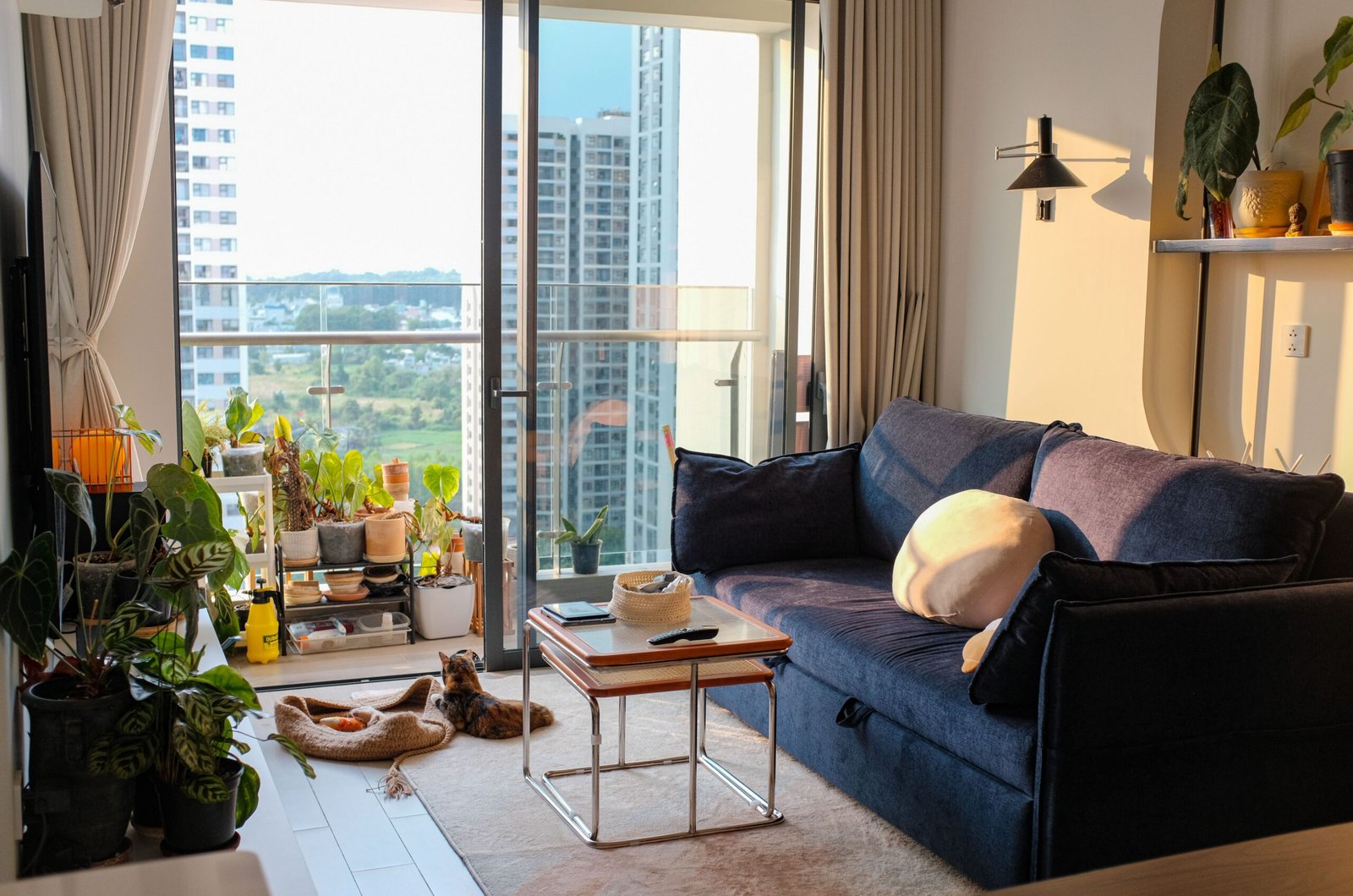
In a small apartment, pets and houseplants share the same limited space. A plant on a low table, windowsill or narrow shelf is much easier for a curious cat or dog to reach than it might be in a larger home.
For this guide, “pet-friendly” means the plant appears on ASPCA guidance as a non-toxic or pet-friendly houseplant. That does not mean a pet should be encouraged to eat it. Chewing any plant material can still cause stomach upset, and individual animals may react differently.
If you are planning an apartment plant collection more broadly, see our guide to indoor plants for small apartments. If your main problem is dim rooms, also see our low-light apartment plant guide.
Quick picks: pet-friendly plants that fit small spaces
| Plant | Best use in a small apartment | Light | Pot strategy |
|---|---|---|---|
| Baby rubber plant / Peperomia | Desk, shelf or side table | Bright indirect to moderate | Small draining pot |
| Spider plant | Hanging basket or high shelf | Bright indirect; tolerates less | Lightweight hanging pot |
| Cast-iron plant | Shady floor position | Low to medium indirect | Stable floor pot |
| African violet | Windowsill or compact table | Bright filtered light | Small pot; avoid oversized containers |
| Phalaenopsis orchid | Narrow shelf or table | Bright indirect | Airy orchid pot |
| Burro's tail | Hanging position | Bright light | Shallow draining pot |
| Blue echeveria | Sunny windowsill | Bright light | Small fast-draining pot |
| Parlour palm | Soft vertical floor plant | Medium to lower indirect | Stable pot with drainage |
1. Baby rubber plant / Peperomia — best for desks and shelves
The ASPCA lists the American rubber plant, also called pepper face or baby rubber plant, among pet-friendly houseplants. This is important because common names can be confusing: “rubber plant” can refer to very different botanical plants, so always check the exact species you are buying.
Why it fits: many peperomias remain compact, making them easy to place on a desk, shelf or narrow side table.
Pot strategy: do not bury a compact plant in a large decorative container. A small pot with drainage is easier to water correctly and occupies less visual and physical space.
2. Spider plant — best for vertical space
Spider plant is one of the most practical combinations of apartment-friendly growth and pet-friendly status. ASPCA includes it on its pet-friendly houseplant list, and the Royal Horticultural Society describes spider plants as easy to grow and tolerant of a range of indoor conditions.
Why it fits: the base stays relatively compact while the leaves and plantlets cascade outward, so it works well on shelves or in hanging planters.
Pot strategy: choose a lightweight pot with drainage if it will hang overhead. Remember to calculate the weight when the substrate is fully wet, not just when the pot is dry.
3. Cast-iron plant — best for a darker floor position
The ASPCA includes cast-iron plant among pet-friendly options. It is also one of the stronger choices for rooms with less light. The RHS highlights Aspidistra for shady indoor positions.
Why it fits: upright leaves create greenery without the huge horizontal spread of many floor plants.
Pot strategy: use a stable container, but avoid excessive pot volume. In lower light, the growing mix dries more slowly.
4. African violet — best for a small flowering plant
African violet is included on the ASPCA pet-friendly list and gives you flowers without requiring the floor area of a large ornamental plant.
Why it fits: compact rosette growth works well on a windowsill, shelf or small table.
Light reality: pet-friendly does not mean low-light tolerant. African violets need useful filtered light to flower well, so put them near a suitable window rather than in a dark corner.
Pot strategy: keep the container proportionate to the root system. A huge cachepot adds weight and wet substrate without helping a compact plant.
5. Phalaenopsis orchid — best for flowers with a narrow footprint
ASPCA includes Phalaenopsis orchid among pet-friendly houseplants. Moth orchids use surprisingly little horizontal space and can produce a strong visual effect on a narrow table or shelf.
Why it fits: the plant base is compact while the flower stem provides height.
Pot strategy: orchids are not ordinary potting-soil plants. Use an appropriate airy orchid medium and container rather than treating the decorative outer pot as the growing pot.
6. Burro's tail — best for a bright hanging position
ASPCA lists donkey's tail / burro's tail among pet-friendly plants. Its trailing stems make it useful when floor and table surfaces are limited.
Why it fits: it moves the visual mass upward and lets the stems cascade from a shelf or hanging planter.
Light reality: this is not a solution for a dark apartment. Succulent growth needs much brighter conditions than a cast-iron plant or parlour palm.
Pot strategy: use a shallow, fast-draining container and handle it gently; the fleshy leaves can detach easily.
7. Blue echeveria — best for a sunny windowsill
Blue echeveria is another pet-friendly succulent on the ASPCA list. Its compact rosette form makes it ideal where you have very little surface area but strong light.
Why it fits: a lot of sculptural impact in a small footprint.
Light reality: a bright window is far more important than calling the plant “easy care.” Poor light can quickly undermine the compact shape that makes echeveria attractive.
Pot strategy: use a small container with excellent drainage and avoid a deep reservoir of wet mix.
8. Parlour palm — best for soft vertical height
The ASPCA includes parlour palm on its pet-friendly list. It is useful when you want a floor plant that adds height without the enormous leaves of many tropical statement plants.
Why it fits: slender stems and fine foliage create a softer silhouette in a narrow space.
Light: parlour palm tolerates lower indoor light better than many palms, although good indirect light supports stronger growth.
Pot strategy: choose a stable floor pot with drainage. If the plant is near a pet traffic route, stability matters as much as appearance.
Pet-friendly is not the same as pet-proof
Even a plant classified as non-toxic can still become a problem if a pet knocks it over, eats large quantities of leaves, digs in the potting mix or drinks water collected in a saucer.
In a small apartment, consider the whole setup:
- keep heavy pots away from shelf edges;
- secure hanging hardware for the full wet weight;
- do not leave fertilizer solution or standing drainage water accessible;
- avoid loose decorative stones that a pet may swallow;
- keep plant-care chemicals stored separately from the plant display.
Common-name confusion matters
One of the biggest plant-safety mistakes is buying by common name alone. “Rubber plant,” “palm,” “ivy” and similar names may be used for unrelated species with different safety profiles.
Before bringing a plant home, look for the botanical name on the label and compare that exact plant with the ASPCA toxic and non-toxic plant database. If the seller cannot identify the species, do not assume the plant is safe.
How to choose between these eight plants
- Small desk or shelf: baby rubber plant / peperomia.
- Hanging plant with moderate light: spider plant.
- Darker floor location: cast-iron plant.
- Compact flowering plant: African violet.
- Narrow flowering display: Phalaenopsis orchid.
- Bright hanging location: burro's tail.
- Sunny tiny windowsill: blue echeveria.
- Soft vertical floor plant: parlour palm.
Once you choose the plant, match the container to the root system, watering pattern and location rather than choosing by appearance alone. Our Find My Pot tool can help narrow the pot type.
Frequently asked questions
Does “non-toxic” mean my cat or dog can safely eat the plant?
No. Non-toxic classification is not permission to eat the plant. Large amounts of plant material can still irritate the digestive system, and individual animals may react differently.
What is the best pet-friendly plant for a dark apartment?
Cast-iron plant is a strong starting point because ASPCA lists it as pet-friendly and the RHS highlights it for shady rooms. Parlour palm can also tolerate lower indoor light, but neither plant should be kept in complete darkness.
What is the best pet-friendly plant for a small shelf?
Baby rubber plant / peperomia is one of the easiest compact options. African violet can also work if the shelf receives enough filtered light.
Are hanging plants automatically safe from pets?
No. Cats can reach surprising heights, trailing stems may hang within reach and a falling pot can cause injury. Pet safety includes plant toxicity, placement and hardware security.
What should I do if my pet eats a plant I cannot identify?
Contact your veterinarian or an animal poison-control service promptly. If possible, keep the plant label or take a clear photo to help identify the species.