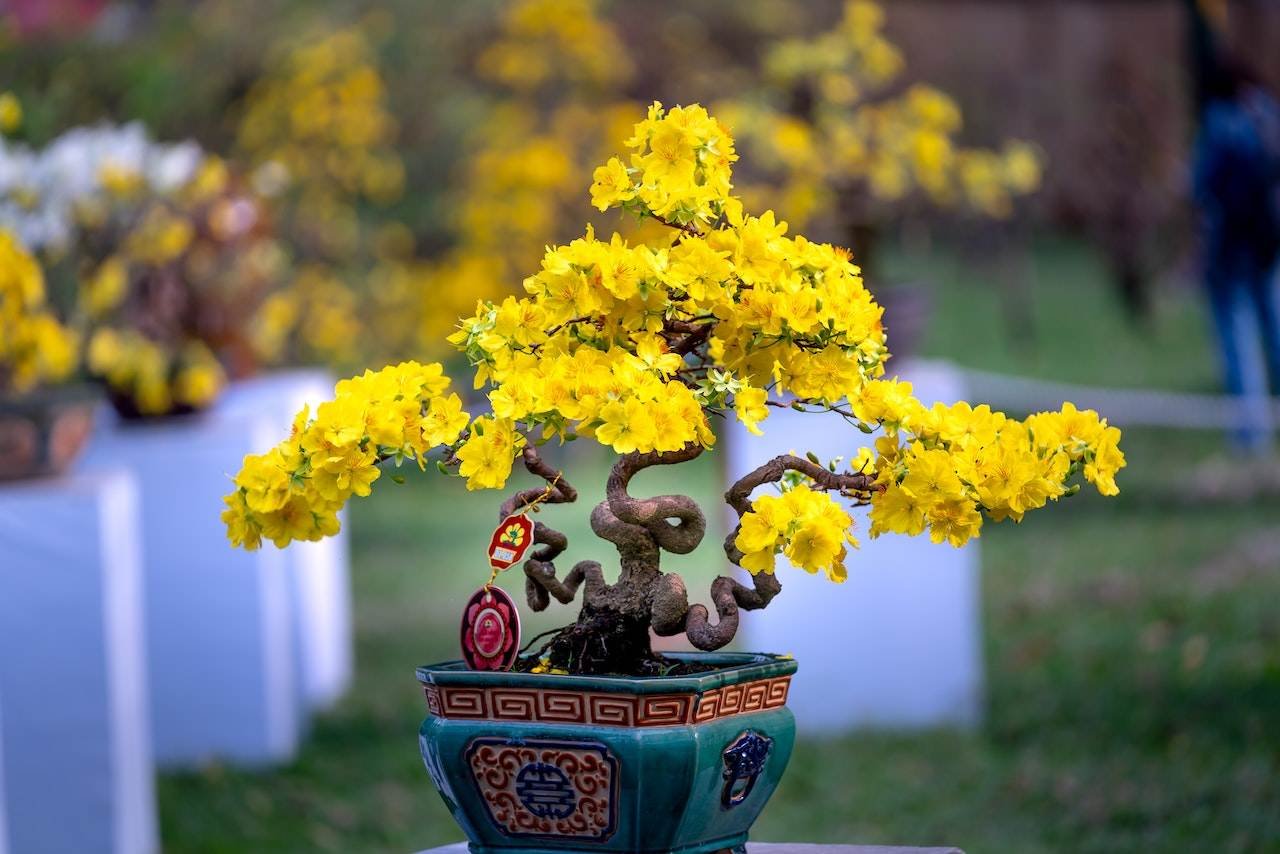
A bonsai pot is both a growing environment and part of the visual composition. Get the horticulture wrong and the tree suffers; get the proportions wrong and the composition feels unsettled. This guide explains how to choose size, depth, drainage, material and style without treating old rules of thumb as absolute laws.
Choosing a bonsai pot is one of the places where horticulture and aesthetics meet directly. A shallow container can help create the visual language we associate with bonsai, but it also reduces the volume of growing medium around the roots. That changes how quickly the tree dries, how often it needs watering and how much margin for error you have.
For that reason, the first question is not "Which pot looks best?" It is "What does this tree need at its current stage?"
Training pot or display pot?
Before comparing shapes and glazes, decide whether the tree is still being developed or is ready for refinement and display.
Training containers
Young or developing bonsai often benefit from more root room than a refined show pot provides. If you are still building trunk thickness, primary branches or a stronger root system, a practical training container may be the better choice. The Bonsai Society of Greater Kansas City notes that moving a tree into a bonsai pot too early can limit the growing area and slow development.
Training containers can be plastic, mica or other durable materials. They do not need to be beautiful. They need to drain well, hold the root mass safely and support the development plan.
Display pots
Once the tree has reached a more mature stage, the pot becomes part of the composition. A refined bonsai pot should still meet the horticultural requirements, but now shape, color, visual weight and surface finish matter too.
Drainage comes before style
A bonsai pot must drain reliably. Bonsai Society guidance emphasizes that bonsai containers need drainage holes, preferably more than one, and that a flat interior bottom helps prevent water from collecting in low spots.
Good bonsai pots often include:
- one or more generous drainage holes;
- smaller tie-down holes for anchoring the tree;
- feet or geometry that allow water to leave the base freely;
- a level interior that does not create hidden puddles.
Drainage is not the same thing as "the pot should always stay dry." The goal is predictable water movement through the substrate. Species, climate, substrate particle size, root density and container depth all affect how quickly moisture is lost.
How big should a bonsai pot be?
Traditional bonsai design uses proportion rules as starting points. A common aesthetic guideline is that the pot length is roughly two-thirds of the tree's height, or roughly two-thirds of its visual spread when width is the dominant feature. Depth is often related to trunk thickness for upright trees.
Those proportions are visual rules of thumb, not universal horticultural formulas. A species with a vigorous root system, a recently collected tree, a tree in recovery or a tree living in a hot, dry climate may need different priorities.
When the pot is too large
An oversized pot can hold more growing medium than the root system actively occupies. Depending on the substrate and environment, that may keep the root zone wet for longer and make watering harder to judge. It can also make a refined tree look visually undersized.
When the pot is too small
An undersized pot can restrict root space, reduce moisture reserves and force very frequent watering. In hot or windy conditions, the margin between adequately moist and dangerously dry can become narrow.
The correct size is therefore the smallest container that supports the tree's health, stability and development plan - not simply the shallowest pot you can physically fit beneath the roots.
Pot depth: one of the most important choices
Depth changes both visual weight and horticultural behavior. Shallow pots create a lighter, more mature appearance, but they contain less substrate and can dry faster. Deeper pots provide more moisture buffer and root volume.
As a general design convention, upright trees often pair well with pots whose depth visually relates to trunk diameter. Cascade and semi-cascade styles are exceptions: they commonly use deeper containers to counterbalance the descending mass of the tree.
Shape: rectangle, oval, round or cascade?
Rectangular pots
Rectangular pots can reinforce strength, age and structure. They are often paired with trees that have powerful trunks, pronounced deadwood or a more formal presence. Softer corners create a gentler effect than sharp corners.
Oval pots
Oval containers are versatile and visually softer. They work well with many deciduous trees, flowering bonsai and compositions where a rigid rectangle would feel too heavy.
Round pots
Round pots can suit bunjin/literati compositions, some informal styles and trees whose viewing angle may change. Because the pot has no obvious "front," the trunk movement and planting position carry more of the visual direction.
Cascade pots
Cascade bonsai require deeper pots because the descending tree mass needs visual and physical counterbalance. Stability becomes especially important; a lightweight pot paired with a heavy cascade can be impractical.
Glazed or unglazed?
There is no biological rule that conifers must be unglazed and flowering trees must be glazed, but those traditions often create convincing visual harmony.
- Unglazed stoneware tends to emphasize bark, age, ruggedness and natural texture.
- Glazed pots can echo foliage, flowers, fruit or seasonal color.
- Neutral glazes are easier to pair with trees that change dramatically through the year.
A useful principle is that the pot should support the tree rather than become the first thing you notice. If the glaze is louder than the trunk, foliage or flowers, the composition may be competing with itself.
Color: complement, do not duplicate
Pot color does not have to match foliage exactly. In fact, exact matching can flatten a composition. Look instead for relationships:
- earth tones that echo bark;
- cool blue or green glazes that contrast with warm flowers or autumn color;
- muted neutrals that allow dramatic foliage to dominate;
- subtle surface texture that reinforces age without distracting from the tree.
Material: what actually matters?
For a refined bonsai, fired ceramic or stoneware is the traditional standard because it combines weight, durability and visual quality. But material choice should also consider climate.
If the tree remains outdoors through freezing weather, the pot must be sufficiently frost-resistant for those conditions. A beautiful porous ceramic that absorbs water and fractures during freeze-thaw cycles is not a good outdoor choice in a cold climate.
For training, plastic and mica containers can be excellent because they are light, durable and inexpensive. A training pot is a tool, not a failure of aesthetics.
Tie-down holes and tree stability
Freshly repotted bonsai need stability while new roots establish. Movement at the base can damage fine new roots. Dedicated tie-down holes make it easier to secure the root mass without obstructing the main drainage holes.
If a pot lacks tie-down holes, anchoring can sometimes be routed through drainage holes, but purpose-built tie-down holes are cleaner and leave more drainage area unobstructed.
Match the pot to the tree's stage, not your impatience
One of the most common beginner mistakes is rushing a developing tree into a shallow display pot because it "looks more like bonsai." If the trunk, branch structure or root system still needs development, the more generous training container may produce a stronger tree and a better final bonsai.
Think in phases:
- Development: prioritize growth, root health and structural work.
- Transition: reduce root mass gradually and test shallower containers.
- Refinement: choose the final pot as part of the artistic composition.
Common bonsai pot mistakes
- Choosing by color before checking drainage.
- Using a pot that is too shallow for the tree's current root system.
- Oversizing the pot "for future growth" and creating difficult moisture management.
- Using a beautiful container that is not frost-safe outdoors.
- Ignoring stability and tie-down during repotting.
- Treating proportion guidelines as rigid rules rather than design starting points.
- Moving a developing tree into a show pot too early.
A practical bonsai pot checklist
Before buying, confirm:
- the tree is ready for this stage of container;
- the pot can hold the root mass without severe distortion;
- drainage holes are generous and unobstructed;
- the interior bottom does not trap water;
- the tree can be anchored securely;
- the material suits indoor/outdoor exposure and winter conditions;
- the visual weight of the pot supports the trunk and canopy;
- the color and finish complement rather than overpower the tree.
If you are comparing bonsai pots with ordinary decorative containers, remember that bonsai is a special case. For general houseplants, our Explore Pots framework starts from plant needs, location and drainage before style.
Frequently asked questions
Does every bonsai pot need drainage holes?
Yes. Reliable drainage is fundamental. Dedicated tie-down holes are also very useful, especially after repotting.
How deep should a bonsai pot be?
There is no universal depth. Traditional display proportions often relate pot depth to trunk thickness, but species, root condition, climate and development stage can justify a deeper container.
Should conifers always use unglazed pots?
Unglazed pots are a strong traditional choice for many conifers because they reinforce bark and rugged character, but it is an aesthetic convention rather than a biological requirement.
Can a young bonsai go straight into a shallow show pot?
It can, but it may slow development and make watering/root management harder. If trunk and primary structure are still being developed, a training container is often the more useful tool.