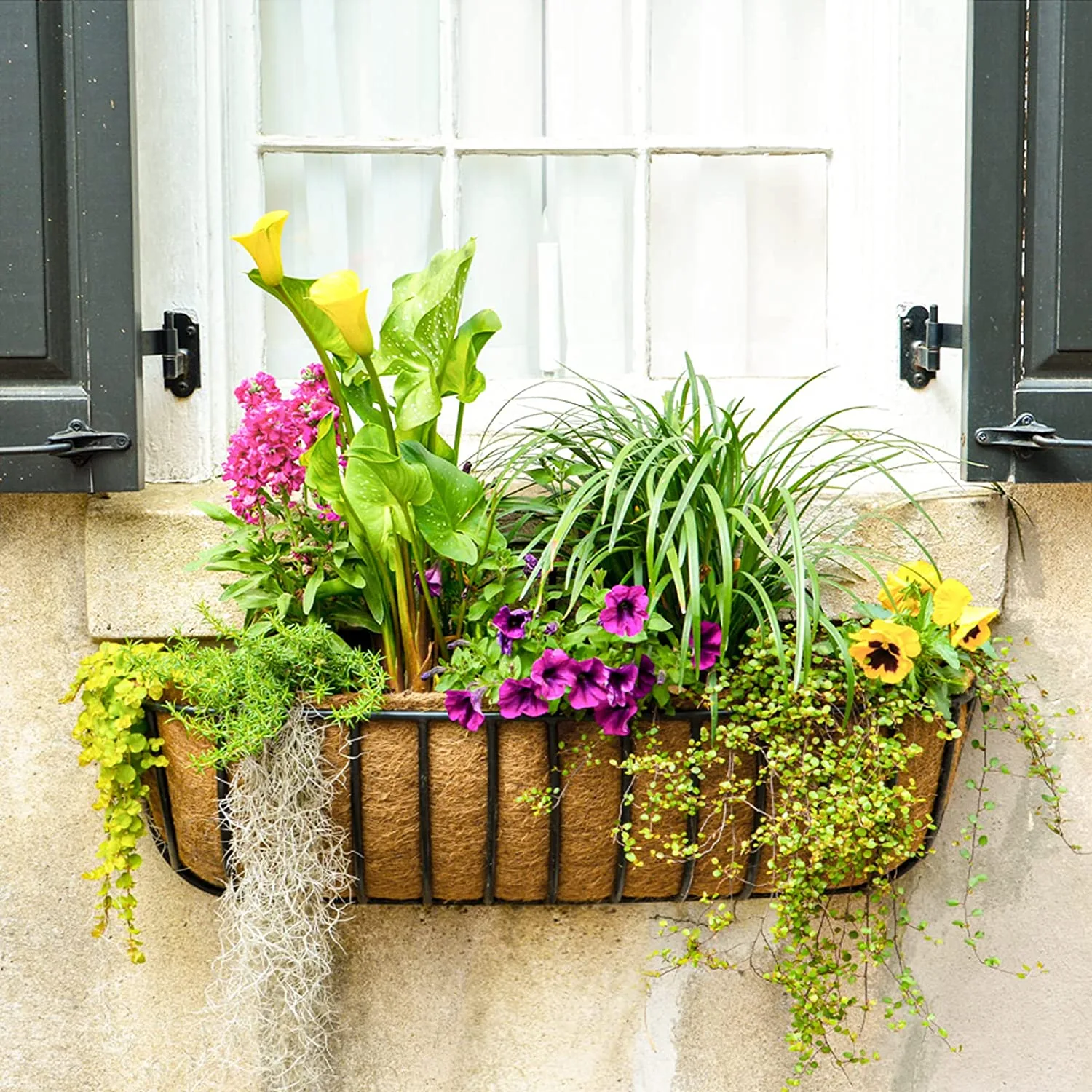
There is no single "greenest" plant pot. A better environmental choice comes from looking at durability, recycled content, transport weight, repairability, local recycling options and how long you will actually use the container.
"Eco-friendly" is one of the easiest labels to print on a planter and one of the hardest claims to evaluate properly. A pot can be made from a natural material and still travel halfway around the world, break after one season or use a coating that makes recycling difficult. A plastic planter can look less sustainable at first glance but perform well for many years, contain recycled resin and avoid repeated replacement.
The useful question is not "Which material sounds green?" It is "Which container creates the lowest practical impact for this plant, this place and this period of use?"
What makes a plant pot more sustainable?
Look at the whole use cycle rather than one marketing word.
- Durability: Will the pot last for years or crack after one season?
- Recycled content: Does the product use recovered material rather than only virgin material?
- Repairability: Can a wooden planter be refinished, a ceramic pot reused, or a metal container repaired?
- Weight: Heavy materials can have a larger transport burden, especially when shipped long distances.
- End of life: Is the material actually accepted by your local recycling system?
- Usefulness: A pot that performs badly for the plant may be replaced early, which undermines the sustainability claim.
- Longevity of style: A timeless planter that you keep for a decade can be a better choice than a fashionable one replaced every season.
Reuse comes before replacement
The U.S. Environmental Protection Agency emphasizes reducing and reusing as core ways to prevent waste. For plant containers, that translates into a simple rule: the pot you already own may be the most sustainable pot available if it is still safe, functional and appropriate for the plant.
Before buying new, consider:
- cleaning and reusing nursery pots;
- moving a decorative cachepot to a different plant;
- repairing or refinishing wooden planters;
- using saucers, liners or inner pots to extend the life of an outer container;
- repurposing suitable household vessels where safe drainage can be added.
The Royal Horticultural Society specifically notes that many containers can be repurposed for growing, provided they are sturdy enough and have adequate drainage.
Terracotta: natural, durable and not automatically low-impact
Terracotta is fired clay. It is durable, repairable in some cases and visually timeless. Its porosity can help potting media dry more quickly, which can suit many drought-tolerant plants. It is also relatively heavy and fragile compared with plastic.
Terracotta can be a strong environmental choice when it is locally produced, used for many years and not repeatedly replaced. But "natural" does not mean impact-free: clay extraction, kiln firing and transport all require resources.
Glazed ceramic: long life can be its biggest advantage
Glazed ceramic often requires energy-intensive firing and can be heavy to transport, but a well-made ceramic planter can last for decades. Its sustainability therefore depends strongly on lifespan.
For indoor use, ceramic cachepots can be particularly durable because the plant remains in a lightweight inner pot and the decorative vessel experiences less root pressure and moisture cycling.
Plastic: judge the specific product, not the word
Plastic is often treated as automatically unsustainable, but the real picture is more complicated. A thin, disposable planter made from virgin plastic and replaced frequently is difficult to defend. A thick planter with recycled content that lasts for many years is a different product.
When evaluating plastic pots, look for:
- post-consumer or post-industrial recycled content;
- UV resistance for outdoor use;
- thick enough construction to survive repeated seasons;
- a resin identification code;
- whether your local recycling program accepts that specific resin and product shape.
The EPA warns that a resin identification symbol does not guarantee that an item is recyclable in your local system. Local acceptance rules matter.
Recycled plastic and composite planters
Recycled-plastic planters can be useful where low weight, weather resistance and long service life matter. Some composites combine recycled plastic with fibers or mineral fillers to create a more stone-like finish.
The main questions are transparency and end-of-life options. "Composite" can describe many material combinations, and mixed materials may be harder to recycle than a single resin. Look for manufacturers that state the recycled percentage and material composition clearly.
Bioplastics and plant-fiber pots
Biobased does not automatically mean compostable, and compostable does not automatically mean suitable for a home compost pile. Some plant-fiber or molded-fiber pots are designed for short nursery use; others are decorative products intended to last longer.
Before treating a biodegradable claim as an environmental advantage, check:
- whether the product is certified compostable or simply "biobased";
- whether industrial composting is required;
- whether the pot is intended to be planted directly into soil;
- how quickly it loses strength when wet;
- whether a coating or liner changes disposal options.
Wood: renewable material, but construction matters
Wood can be an excellent planter material when it comes from responsibly managed sources and is built to last. Its main challenge is constant moisture.
For outdoor planters, look for durable species, sound joinery and a design that prevents standing water against the wood. Liners can extend life, but they should not block the drainage path. Indoors, a wooden cachepot around a separate inner planter is easier to protect.
Metal: durable, recyclable and heat-sensitive
Steel and aluminum can last a long time and have established recycling streams in many places. They also conduct heat efficiently. In strong sun, a dark metal planter can heat the root zone faster than many ceramic, wood or thick composite containers.
Metal therefore makes more sense when location, insulation and plant choice are considered together. Indoors, it often performs best as a decorative outer pot.
Fabric grow bags: lightweight and useful, but not immortal
Fabric containers can provide excellent aeration and are easy to store when not in use. Their environmental performance depends on the fiber, stitching, lifespan and whether the bag can be cleaned and reused for multiple seasons.
A fabric pot that lasts several growing cycles can be practical. A thin one that degrades quickly becomes another replacement product.
The growing medium is part of the sustainability decision
The pot itself is only one component of container gardening. Potting mix matters too.
The Royal Horticultural Society recommends peat-free composts and notes that peatlands are important carbon stores and biodiversity habitats. Peat-free mixes now use materials such as composted bark, coir, wood fiber, loam and other ingredients depending on the formulation.
When buying potting mix, read the bag carefully. Terms such as "natural" or "organic" do not necessarily mean peat-free.
A better way to compare planter materials
| Material | Strength | Main trade-off | Best reason to choose it |
|---|---|---|---|
| Terracotta | Breathable, timeless, long-lived | Heavy and breakable | You want a durable porous pot and can manage the weight |
| Glazed ceramic | Very durable and decorative | Heavy; energy-intensive production | You will keep it for many years |
| Recycled plastic | Light, weather-resistant, practical | Local recycling may be limited | You need low weight and long service life |
| Wood | Renewable, warm appearance | Moisture can shorten lifespan | Construction is durable and source is credible |
| Metal | Strong and often recyclable | Heat conduction and weight | Long life and architectural style matter |
| Fiber/biobased | Can reduce fossil feedstock | Durability and disposal claims vary | Certification and end-of-life route are clear |
How to spot greenwashing in plant pots
Be cautious when a product relies on vague language without measurable information.
Red flags include:
- "eco" with no explanation of the material;
- "recyclable" without identifying the resin or realistic recycling route;
- "biodegradable" with no conditions or certification;
- "made with recycled material" without stating approximately how much;
- claims focused on packaging while ignoring the planter itself;
- a supposedly sustainable product designed for very short use.
Better product pages explain material composition, recycled percentage, durability, manufacturing location and disposal guidance.
Seven ways to make your container garden more sustainable
- Reuse sound pots before buying replacements.
- Choose a container that fits the plant so it does not need immediate repotting.
- Prioritize durability over novelty.
- Buy locally made heavy planters when practical to reduce long-distance transport.
- Use peat-free potting media where suitable and available.
- Repurpose containers safely, adding drainage where needed.
- Check local recycling rules instead of assuming a material will be accepted.
If you are choosing a pot primarily by plant need rather than material, use Find My Pot. If design is the bigger question, our guide to design pots looks at scale, color, shape and interior styling.
Frequently asked questions
What is the most eco-friendly plant pot?
There is no universal winner. A reused pot is often hard to beat. For a new purchase, compare durability, recycled content, transport, plant suitability and realistic end-of-life options.
Are terracotta pots sustainable?
They can be, especially when locally produced and used for many years. They are made from natural clay but still require extraction, firing and transport.
Are plastic pots recyclable?
Some are, but recyclability depends on the resin and your local collection system. A recycling symbol or resin code does not guarantee local acceptance.
Are biodegradable pots always better?
No. Check what "biodegradable" means, under what conditions it breaks down, how long it lasts in use and whether special industrial composting is required.
Does peat-free potting mix matter?
Yes. Peat extraction affects peatland ecosystems and carbon stores. Peat-free mixes are now widely available for many container uses.